Run your practice with an agent stack.
Decoded designs the agents. Your team runs them. One-time engagement, compound returns.
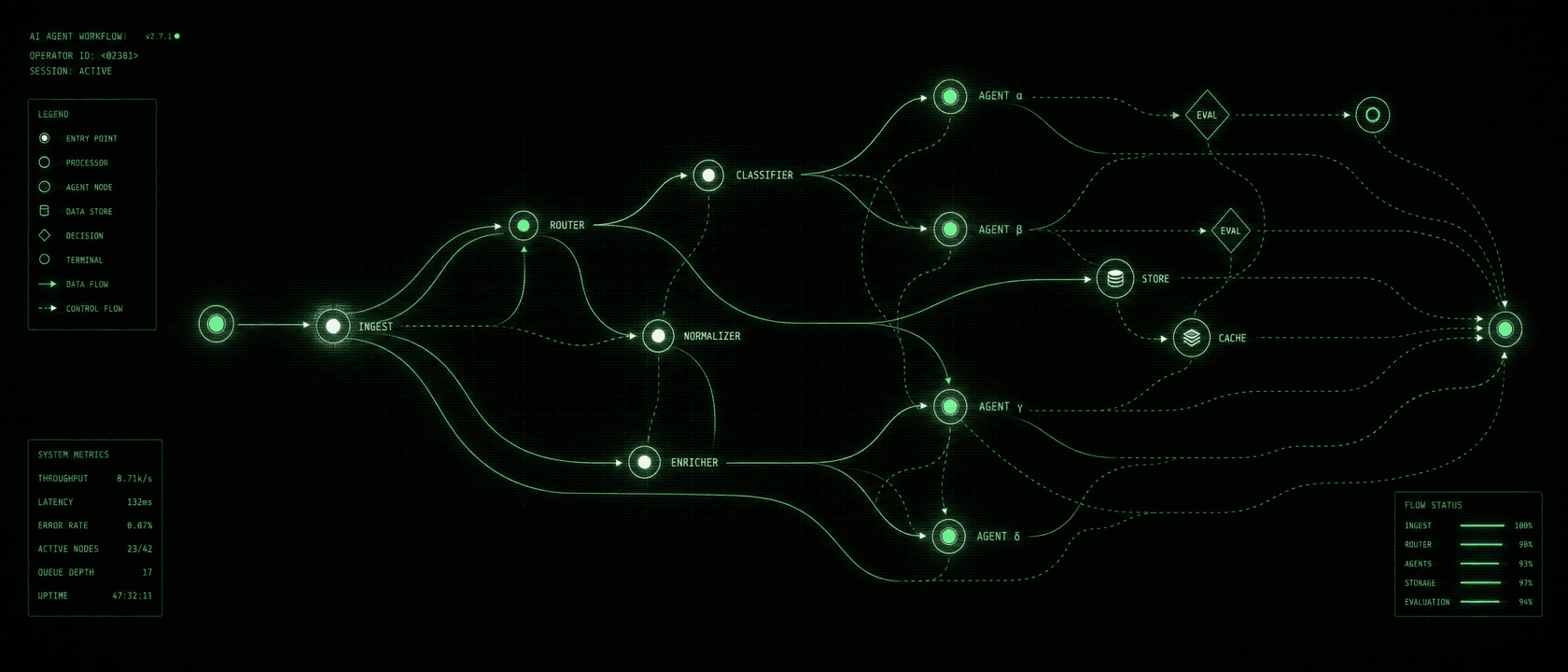
The unit of work is the stack — not the tool.
Most clinics evaluating AI in 2026 are pricing it by tool. The right unit of work is the agent stack — a coordinated set of specialised agents that handle intake, documentation, follow-up, recall, marketing, and reporting against a clean handoff protocol with the human team. Designed once, the stack runs without continued vendor dependency. The clinics extracting durable value are the ones that scope the deployment, name the handoff points, and own the operating manual.
This company runs on an agent stack. Every surface — content production, partner intake, regulatory monitoring, deal triage — sits behind a coordinated agent layer with named human checkpoints. We have lived through the design decisions, the failure modes, and the second-order operating effects. Practice AI is the productised version of that experience: the same architectural discipline, scoped to the way a longevity-aesthetic practice actually runs.
Three tiers, scoped to where you are.
All tiers run as one-time engagements with a documented handoff. Pricing is set against scope and named in the inquiry conversation.
- [FOUNDATION · 4-WEEK]
Foundation.
Single-stack deployment for a clinic ready to remove its biggest operational drag.
[SCOPE]- One workflow surface — intake, recall, follow-up, or marketing-side communication.
- Single-EMR or single-channel scope; no cross-system orchestration.
- Two named human handoff points; failure-mode documentation for both.
- Working configuration in your environment, not a slide deck.
[TYPICAL DELIVERABLES]- — Audit memo on where the stack will and will not return.
- — Designed agent stack for the chosen surface, configured and live.
- — Operating manual the practice team owns and edits.
- — Handoff session and a first-month review checkpoint.
- [GROWTH · 8-WEEK]
Growth.
Three coordinated workflows for a clinic ready to systematise the operating layer.
[SCOPE]- Three workflow surfaces designed as a coordinated stack with shared handoff protocol.
- EMR plus one secondary system (booking, payment, or marketing automation).
- Operations-lead training across the three surfaces; failure-mode documentation per agent.
- Operating dashboard for run-state visibility; thirty-day review baked in.
[TYPICAL DELIVERABLES]- — Audit and scope memo across the three chosen surfaces.
- — Three coordinated agent stacks, configured, live, and integrated.
- — Cross-stack operating manual with handoff protocol.
- — Operations-lead training and thirty-day review.
- [TRANSFORMATION · 12-WEEK]
Transformation.
Full operating-layer redesign for a multi-site or post-spreadsheet practice.
[SCOPE]- Full operating-layer audit and agent-stack design across intake, documentation, recall, marketing, reporting, and partner-side workflows.
- Cross-clinic standardisation for multi-site groups; per-site customisation where the patient mix demands it.
- Leadership-level operating manual plus per-team playbooks; handoff protocol across all surfaces.
- Sixty-day review baked in; ninety-day optional review on inquiry.
[TYPICAL DELIVERABLES]- — Operating-layer audit across all in-scope surfaces.
- — Full coordinated agent stack, configured, live, and integrated across systems.
- — Cross-site operating manual with leadership-level and per-team versions.
- — Operations-lead training, sixty-day review, and named ninety-day option.
Across every tier.
- 01
An audit of where your practice currently spends labour and where an agent layer is honestly defensible.
- 02
A scoped agent stack designed against your patient mix, your EMR, your channel posture — not a generic template.
- 03
Working configuration in your environment with documented prompts, guardrails, and failure modes.
- 04
An operating manual your team owns from day one — no continued Decoded dependency required for the stack to run.
- 05
A handoff session with your operations lead and a named first-month review checkpoint.
- 06
Optional thirty- and sixty-day reviews on inquiry — the engagement is one-time, not retainer.
Practices ready to own the operating layer.
- Single-clinic owners ready to move from spreadsheet operations to designed workflow.
- Multi-clinic groups pre-rolling out a standard operating manual across sites.
- Longevity and aesthetic practices where intake, recall, and follow-up volume is the binding labour cost.
- Practice leadership who want to own the stack — not subscribe to it.
And who would not get value.
- Practices looking for a continuous managed-service relationship — Practice AI is one-time, by design.
- Teams unwilling to own and edit the stack post-handover — the operating discipline lives with the practice.
- Solo practitioners with sub-five hours of weekly labour on the workflows the stack would handle — the math will not return.
- Anyone expecting clinical decision-making automation — the stack is operational, not clinical.
Common questions, answered honestly.
What does the engagement look like end to end?
Kickoff and audit week one. Design and configuration weeks two through (tier-dependent). Handoff session at the end. A first-month review checkpoint is included; thirty- and sixty-day reviews are available on inquiry. The engagement is one-time, by design — not retainer.
Who owns the stack post-handover?
Your practice does. The operating manual, the agent configurations, the prompts, the guardrails — all live in your environment under your team's edit access from day one. We do not lock the stack to a Decoded dependency.
Do we need a specific EMR or tooling layer for this to work?
No. Practice AI is designed against your existing stack. Most engagements integrate with one EMR plus one or two secondary systems (booking, payment, marketing automation). If your stack is genuinely incompatible with a designed agent layer, the audit will say so.
Is this marketing-only, ops-only, or both?
Both. The Foundation tier picks one surface; Growth coordinates three; Transformation rebuilds the operating layer end to end. Patient-facing marketing communication and clinic-internal operations sit inside the same designed stack.
What does “agent stack” actually mean in your hands?
A coordinated set of specialised agents — each scoped to a defined workflow surface — running against an explicit handoff protocol with the human team. Not a single chatbot. Not a generic productivity wrapper. The stack is designed against your practice and your patient mix; failure modes and human checkpoints are named and documented.
Tell us about the practice.
We respond within five business days. The first conversation is a scope check — no commitment.